
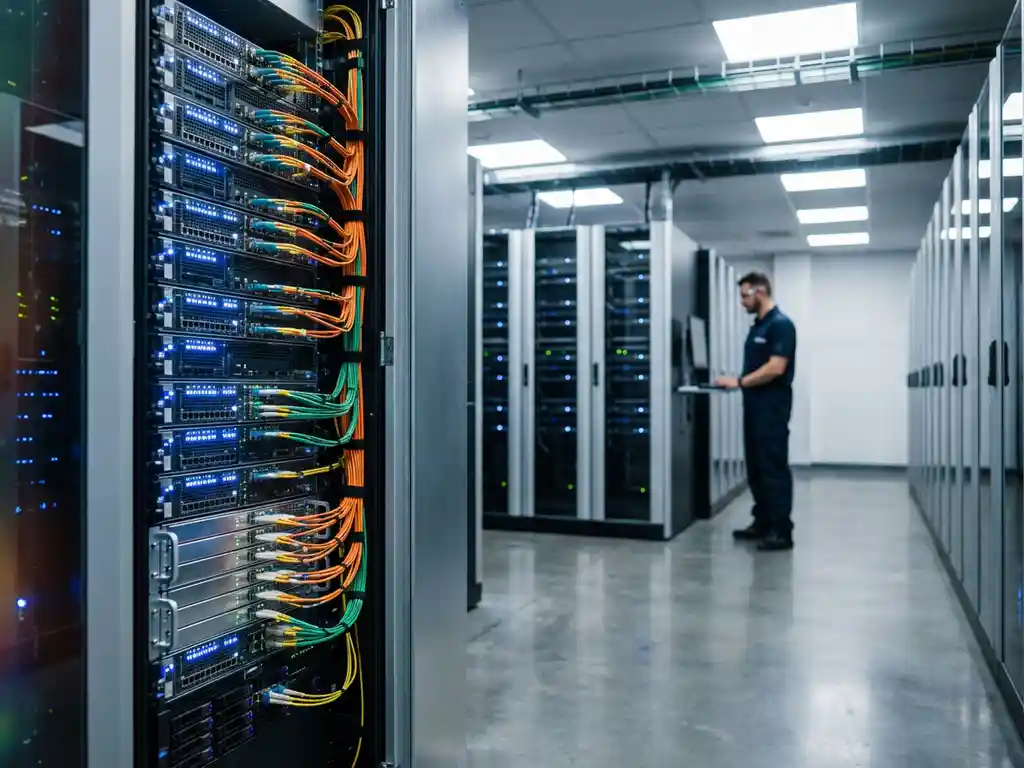
Die Wahl des richtigen Infrastrukturpartners für Ihr Unternehmen setzt voraus, dass Sie die verschiedenen verfügbaren Hosting-Optionen kennen und verstehen. Ein Colocation-Anbieter bietet eine einzigartige Lösung, die die Lücke zwischen dem Betrieb eigener Server und der vollständigen Abhängigkeit von Cloud-Diensten schließt.
Für Unternehmen, die die Kontrolle über ihre Hardware behalten und gleichzeitig von professionellen Rechenzentrumsinfrastrukturen profitieren möchten, liefern Colocation-Anbieter die Infrastruktur, Sicherheit und Konnektivität, die moderne Organisationen benötigen. Erfahren Sie, warum Colocation-Anbieter in der heutigen digitalen Welt unverzichtbar sind.
Was ist ein Colocation-Anbieter?
Ein Colocation-Anbieter ist ein Unternehmen, das Stellfläche, Stromversorgung, Kühlung und Netzwerkkonnektivität an Unternehmen vermietet, die ihre eigenen Server und IT-Geräte in einem professionellen Rechenzentrum betreiben möchten. Anstatt eigene Rechenzentren zu bauen und zu betreiben, können Organisationen ihre Hardware in diesen spezialisierten Einrichtungen unterbringen und behalten dabei die vollständige Kontrolle über ihre Geräte und Daten.
Colocation-Anbieter betreiben sichere, klimatisierte Einrichtungen, die speziell für das Hosting von IT-Infrastruktur konzipiert sind. Sie bieten verschiedene Platzoptionen an – von einzelnen Server-Racks bis hin zu ganzen privaten Bereichen oder Etagen. Der Anbieter stellt die physische Infrastruktur bereit, einschließlich redundanter Stromversorgung, Kühlung, Brandschutzanlagen, Sicherheitssystemen und Hochgeschwindigkeits-Internetanbindung – während die Kunden ihre eigenen Server, Speichergeräte und Netzwerkkomponenten mitbringen.
Diese Konstellation ermöglicht es Unternehmen, von einer professionellen Infrastruktur zu profitieren, ohne die enormen Investitionen aufbringen zu müssen, die der Bau eines eigenen Rechenzentrums erfordern würde. Unternehmen behalten die vollständige Kontrolle über ihre Hardware-Konfiguration, Software-Installationen und Sicherheitsprotokolle und profitieren gleichzeitig vom Fachwissen des Anbieters im Bereich Facility-Management und Betrieb.
Wie funktioniert Colocation-Hosting?
Beim Colocation-Hosting mieten Unternehmen physische Flächen in einem Rechenzentrum, um dort ihre eigenen Server und Netzwerkgeräte zu installieren und zu betreiben. Der Colocation-Anbieter stellt das Gebäude, die Stromversorgung, die Kühlung, die Sicherheit und die Internetanbindung bereit, während der Kunde Eigentümer seiner Hardware bleibt und diese selbst verwaltet.
Der Prozess beginnt in der Regel mit der Auswahl der geeigneten Stellfläche entsprechend Ihren Anforderungen. Die Optionen reichen von Viertel-Racks und Halb-Racks bis hin zu vollständigen Racks, privaten Cages oder dedizierten Suiten. Sobald die Fläche gesichert ist, transportieren die Unternehmen ihre Geräte in das Rechenzentrum, wo geschulte Techniker bei der Installation und Inbetriebnahme unterstützen.
Der Colocation-Anbieter gewährleistet eine unterbrechungsfreie Stromversorgung durch redundante Systeme, hält optimale Temperatur- und Feuchtigkeitswerte aufrecht und stellt mehrere Internetverbindungen für maximale Verfügbarkeit bereit. Die meisten Einrichtungen bieten eine Rund-um-die-Uhr-Überwachung, physische Sicherheit inklusive biometrischer Zugangskontrollen sowie Remote-Hands-Services an – also Vor-Ort-Techniker, die im Auftrag der Kunden grundlegende Wartungsaufgaben übernehmen.
Was ist der Unterschied zwischen Colocation und Cloud-Hosting?
Der wesentliche Unterschied zwischen Colocation und Cloud-Hosting liegt im Hardwarebesitz und der Kontrolle darüber. Bei Colocation besitzen Unternehmen ihre physischen Server und Geräte, die in der Einrichtung eines Anbieters untergebracht sind, während Cloud-Hosting auf gemeinsam genutzten, virtualisierten Ressourcen basiert, die vollständig vom Dienstleister verwaltet werden.
Bei Colocation kaufen, konfigurieren und warten die Kunden ihre eigene Hardware und haben damit die vollständige Kontrolle über Spezifikationen, Leistung und Sicherheitskonfigurationen. Sie sind für Betriebssystem-Updates, Software-Installationen und den Austausch von Hardware verantwortlich. Cloud-Hosting hingegen abstrahiert die physische Infrastruktur vollständig und stellt Rechenressourcen auf Abruf über virtualisierte Umgebungen bereit.
Auch die Kostenstrukturen unterscheiden sich erheblich. Colocation erfordert anfängliche Hardware-Investitionen zuzüglich monatlicher Facility-Gebühren, während Cloud-Dienste in der Regel nutzungsbasierte Preismodelle verwenden. Colocation erweist sich häufig als kosteneffizienter für planbare, langfristige Workloads, während Cloud-Hosting bei variablen oder schnell skalierenden Anwendungen punktet.
Ein weiterer wesentlicher Unterschied liegt in Leistung und Anpassbarkeit. Colocation bietet dedizierte Ressourcen und vollständige Hardware-Kontrolle, was optimierte Konfigurationen für spezifische Anwendungen ermöglicht. Cloud-Hosting bietet Flexibilität und schnelle Skalierbarkeit, kann jedoch durch gemeinsam genutzte Ressourcen die Leistungskonstanz beeinträchtigen.
Was sind die wichtigsten Vorteile eines Colocation-Anbieters?
Die wichtigsten Vorteile eines Colocation-Anbieters umfassen den Zugang zu professioneller Infrastruktur, verbesserte Zuverlässigkeit und Verfügbarkeit, erhöhte Sicherheit, Kosteneinsparungen im Vergleich zum Bau eines eigenen Rechenzentrums sowie überlegene Konnektivitätsoptionen. Diese Vorteile machen Colocation zu einer attraktiven Lösung für Unternehmen, die auf dedizierte Hardware-Leistung angewiesen sind.
Zu den infrastrukturellen Vorteilen zählen redundante Stromversorgungssysteme, fortschrittliche Kühllösungen, Brandschutzanlagen und Notstromaggregate, die einen kontinuierlichen Betrieb gewährleisten. Die meisten Colocation-Einrichtungen erreichen durch diese redundanten Systeme eine Verfügbarkeit von 99,9 % oder mehr – ein Wert, den die meisten Unternehmen intern kaum erreichen können.
Zu den Sicherheitsvorteilen gehören eine physische Überwachung rund um die Uhr, biometrische Zugangskontrollen, Überwachungssysteme und Compliance-Zertifizierungen wie ISO 27001 und SOC 2. Diese Maßnahmen bieten ein Schutzniveau, das für einzelne Organisationen allein kaum erschwinglich wäre.
Konnektivität ist ein weiterer bedeutender Vorteil: Colocation-Anbieter bieten in der Regel Zugang zu mehreren Internetdienstanbietern, Cloud-On-Ramps und Netzwerk-Exchanges. Diese Vielfalt verbessert die Leistung und schafft Redundanz, die die Gesamtzuverlässigkeit erhöht.
Kosteneffizienz entsteht durch die gemeinsame Nutzung von Infrastrukturkosten – Unternehmen müssen nicht in Gebäudebau, spezialisierte Kühlsysteme, Notstrominfrastruktur und Sicherheitssysteme investieren und profitieren dennoch von dedizierter Hardware-Leistung.
Was kostet Colocation?
Die Kosten für Colocation variieren je nach Platzbedarf, Stromverbrauch, Bandbreitenanforderungen und geografischem Standort erheblich. Typische Preise reichen von 200–800 € pro Monat für ein Viertel-Rack bis zu 15.000 € und mehr pro Monat für große, dedizierte Suiten, zuzüglich Kosten für Stromverbrauch und Netzwerkkonnektivität.
Die Stellfläche ist der wichtigste Kostenfaktor. Viertel-Racks, die für kleinere Deployments geeignet sind, kosten in der Regel 200–400 € pro Monat, während vollständige Racks je nach Einrichtung und Standort zwischen 800 und 2.000 € liegen. Private Cages und dedizierte Suiten werden je nach Quadratmeterzahl und individuellen Anforderungen zu Premiumpreisen angeboten.
Der Stromverbrauch verursacht erhebliche Zusatzkosten, die in der Regel pro Kilowattstunde oder über monatliche Stromkontingente abgerechnet werden. Die meisten Anbieter berechnen 0,10–0,25 € pro kWh, wobei Deployments mit höherer Dichte mehr Kühlung und Infrastrukturunterstützung erfordern.
Zusatzleistungen wie Remote-Hands-Support, redundante Internetverbindungen und erweiterte Sicherheitsmaßnahmen werden separat berechnet. Einrichtungskosten, einschließlich Installation und Erstkonfiguration, liegen je nach Komplexität in der Regel zwischen 500 und 2.000 €.
Der geografische Standort hat einen erheblichen Einfluss auf die Preisgestaltung: In großen Ballungsräumen sind die Preise aufgrund höherer Immobilienkosten und der gestiegenen Nachfrage nach Konnektivität zu Finanz- und Technologiezentren entsprechend höher.
Für wen eignet sich ein Colocation-Anbieter?
Colocation eignet sich besonders für Unternehmen, die dedizierte Hardware-Leistung benötigen, Compliance-Anforderungen erfüllen müssen, eine skalierbare Infrastruktur für ihr Wachstum suchen oder die Betriebskosten ihres Rechenzentrums senken möchten, ohne die Kontrolle über ihre IT-Umgebung aufzugeben.
Unternehmen mit planbaren, hochleistungsintensiven Rechenanforderungen profitieren am meisten von Colocation. Dazu zählen Finanzdienstleister, die Handelsplattformen betreiben, Gaming-Unternehmen, die Multiplayer-Server hosten, sowie Medienorganisationen, die große Videodateien verarbeiten. Diese Unternehmen benötigen die konstante Leistung, die dedizierte Hardware bietet.
Organisationen mit strengen Compliance-Anforderungen – etwa Gesundheitsdienstleister, die Patientendaten verwalten, oder Finanzinstitute, die sensible Transaktionen abwickeln – bevorzugen häufig Colocation, da sie damit die direkte Kontrolle über Sicherheitskonfigurationen behalten und gleichzeitig von zertifizierten Einrichtungen profitieren.
Wachsende Unternehmen, die Shared-Hosting entwachsen sind, aber noch nicht für eine vollständige Cloud-Migration bereit sind, finden in Colocation einen idealen Mittelweg. Es bietet Raum für Expansion, ohne die Komplexität des Betriebs eigener Rechenzentren.
Unternehmen, die ihre IT-Kosten optimieren und gleichzeitig die Leistung aufrechterhalten möchten, wählen Colocation häufig als Alternative zum Bau und Betrieb eigener Rechenzentren – insbesondere wenn sie an mehreren geografischen Standorten präsent sein müssen.
Wie unterstützt Telehouse bei Colocation-Diensten?
Wir bieten umfassende Colocation-Lösungen, die auf die vielfältigen Anforderungen von Unternehmen im wichtigsten digitalen Knotenpunkt Deutschlands zugeschnitten sind. Unser Standort in Frankfurt bietet flexible Optionen von einzelnen Racks bis hin zu dedizierten Etagen und ermöglicht so skalierbares Wachstum für Organisationen jeder Größe.
Unsere Colocation-Dienste umfassen:
- Sichere, videoüberwachte Serverräume mit abschließbaren Einzelracks
- Dedizierte Colocation-Bereiche von Cages bis hin zu ganzen Etagen
- Direktanbindung an DE-CIX, Europas führenden Internet-Exchange
- Zugang zu mehr als 400 Carriern und Cloud-Anbietern für optimale Konnektivität
- 24/7 Remote-Hands-Support über unser Network Operations Center
- 100 % Betrieb mit erneuerbarer Energie für nachhaltige Geschäftspraktiken
Mit 25 Jahren Erfahrung und 50.000 m² moderner Rechenzentrumskapazität bieten wir eine professionelle Infrastruktur, die mit Ihren Geschäftsanforderungen wächst. Kontaktieren Sie unser Team, um zu besprechen, wie unsere Colocation-Lösungen Ihre IT-Infrastrukturstrategie optimieren können.