
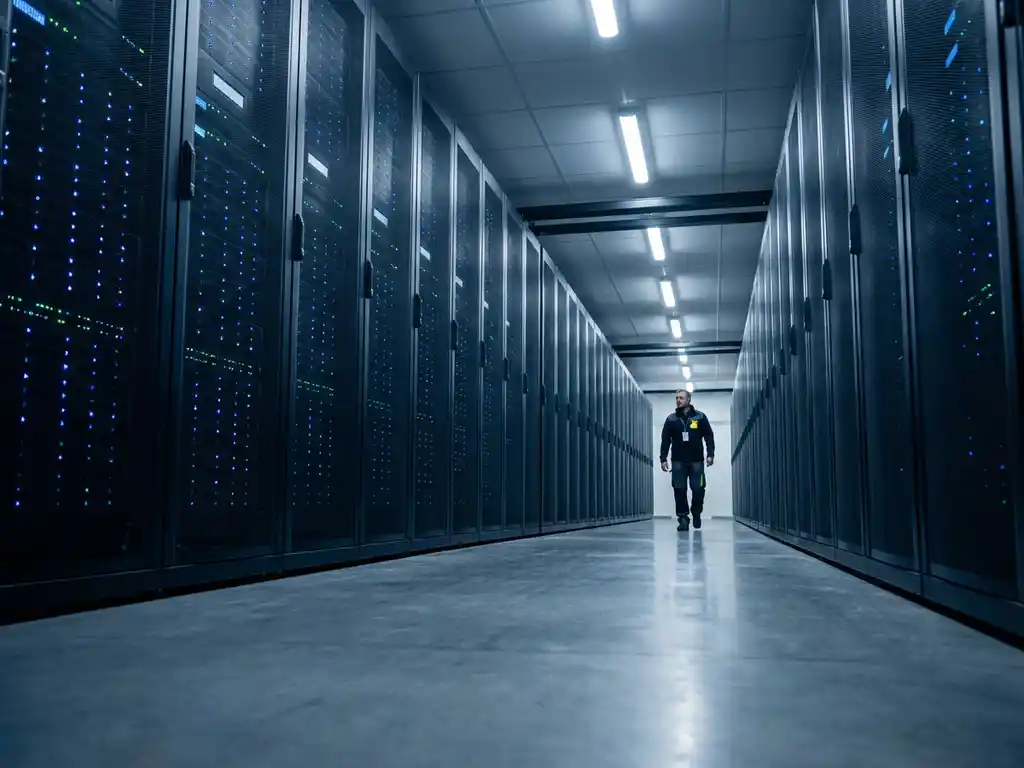
Der deutsche Rechenzentrummarkt erlebt ein beispielloses Wachstum: Große Technologieunternehmen und spezialisierte Anbieter investieren Milliarden von Euro in neue Einrichtungen im ganzen Land. Von Hyperscale-Giganten wie Google und Amazon bis hin zu regionalen Colocation-Anbietern spiegelt die Landschaft des Rechenzentrumsbaus in Deutschland sowohl globale Trends der digitalen Transformation als auch die strategische Position des Landes als größte Volkswirtschaft Europas wider.
Zu verstehen, welche Unternehmen diese Expansion vorantreiben und wo sie bauen, liefert wertvolle Erkenntnisse für Unternehmen, die ihre IT-Infrastrukturstrategie planen. Der Trend rund um den Rechenzentrum Frankfurt Neubau zeigt exemplarisch, wie große Ballungsräume zu Brennpunkten dieses digitalen Infrastrukturbooms werden.
Welche Unternehmen bauen derzeit Rechenzentren in Deutschland?
Große globale Hyperscaler – darunter Google, Microsoft, Amazon Web Services und Meta – führen den Rechenzentrumsbau in Deutschland an, begleitet von spezialisierten Colocation-Anbietern wie Digital Realty, Equinix und Interxion. Diese Unternehmen investieren Milliarden von Euro in neue Einrichtungen, um der wachsenden Nachfrage nach Cloud-Diensten und digitaler Infrastruktur gerecht zu werden.
Google hat bedeutende Investitionen in deutsche Rechenzentren angekündigt, insbesondere in der Region Frankfurt, während Microsoft seine Azure-Cloud-Infrastruktur weiter ausbaut und neue Einrichtungen in mehreren deutschen Städten plant. Amazon Web Services betreibt mehrere Verfügbarkeitszonen in Frankfurt und hat Pläne zur weiteren Kapazitätserweiterung bekannt gegeben.
Europäische Colocation-Spezialisten sind ebenfalls sehr aktiv auf dem deutschen Markt. Digital Realty Trust betreibt mehrere Einrichtungen in Frankfurt und hat Expansionspläne angekündigt, während Equinix seinen deutschen Fußabdruck durch Neubauten und strategische Übernahmen weiter ausbaut. Interxion, mittlerweile Teil von Digital Realty, ist fest im Frankfurter Rechenzentrums-Ökosystem verankert.
Zu den inländischen Akteuren zählen Unternehmen wie e-shelter, das Einrichtungen in ganz Deutschland betreibt, sowie regionale Anbieter, die sich auf bestimmte Ballungsräume konzentrieren. Diese Unternehmen kooperieren häufig mit internationalen Firmen oder bieten lokale Alternativen für Unternehmen, die eine in Deutschland ansässige Infrastruktur benötigen.
Warum investieren so viele Unternehmen in deutsche Rechenzentren?
Unternehmen investieren stark in deutsche Rechenzentren, weil das Land strenge Datenschutzgesetze, eine zentrale europäische Lage, eine robuste Wirtschaft und die Position als größter digitaler Markt Europas bietet. Die DSGVO-Anforderungen und Initiativen zur digitalen Souveränität machen die lokale Datenspeicherung für Unternehmen, die europäische Kunden bedienen, zunehmend attraktiv.
Das regulatorische Umfeld spielt eine entscheidende Rolle bei Investitionsentscheidungen. Das deutsche Datenschutzrecht verpflichtet viele Unternehmen dazu, europäische Kundendaten innerhalb der Landesgrenzen zu speichern und zu verarbeiten – was eine strukturelle Nachfrage nach lokaler Infrastruktur erzeugt. Dieser regulatorische Treiber sorgt für eine nachhaltige Auslastung deutscher Rechenzentrumkapazitäten.
Die geografische Lage Deutschlands bietet strategische Vorteile für Unternehmen, die europäische Märkte bedienen. Frankfurt fungiert insbesondere als wichtiger Internet-Knotenpunkt und beherbergt DE-CIX, einen der größten Internetknoten der Welt. Diese Konnektivität macht deutsche Rechenzentren ideal für latenzarme Anwendungen und die Content-Auslieferung in ganz Europa.
Wirtschaftliche Stabilität und Energieinfrastruktur ziehen ebenfalls Investitionen an. Trotz jüngster Herausforderungen auf dem Energiemarkt schafft Deutschlands Bekenntnis zu erneuerbaren Energien und einer zuverlässigen Stromversorgung langfristiges Vertrauen für Rechenzentrumsbetreiber, die jahrzehntelange Investitionen in kritische Infrastruktur planen.
In welchen Regionen Deutschlands wird am meisten gebaut?
Frankfurt führt den deutschen Rechenzentrumsbau an, gefolgt von Berlin, München und Hamburg. Frankfurt allein macht rund 40 % der deutschen Rechenzentrumkapazität aus – getragen von seiner Rolle als Finanzzentrum und wichtigem Internetknotenpunkt über DE-CIX.
Die Metropolregion Frankfurt dominiert weiterhin den Neubau, und das aus mehreren Gründen: Das etablierte Ökosystem aus Carriern, Cloud-Anbietern und Finanzinstituten erzeugt eine natürliche Nachfrage nach Colocation-Diensten. Die Präsenz großer Banken und Handelsunternehmen erfordert ultraschnelle Konnektivität mit minimaler Latenz, was Frankfurt zu einem idealen Standort für die Finanzdienstleistungsinfrastruktur macht.
Berlin hat sich zum zweitgrößten Markt entwickelt, insbesondere für Unternehmen, die die deutsche Bundesregierung und den öffentlichen Sektor bedienen. Das wachsende Startup-Ökosystem und die Technologieunternehmen der Hauptstadt treiben die Nachfrage nach Hyperscale- und Enterprise-Rechenzentrumsdiensten gleichermaßen an.
München zieht Rechenzentrumsinvestitionen aufgrund seiner starken industriellen Basis und der Nähe zu wichtigen europäischen Märkten an. Die Rolle der Stadt als Technologiezentrum – insbesondere in der Automobil- und Fertigungsbranche – schafft spezifische Nachfrage nach Edge-Computing und industriellen IoT-Anwendungen.
Hamburgs Hafenlage und Logistikbranche eröffnen einzigartige Möglichkeiten für Rechenzentren, die Lieferketten- und Schifffahrtsanwendungen unterstützen, während Städte wie Düsseldorf und Köln von ihrer Lage im industriellen Herzen Deutschlands profitieren.
Was ist der Unterschied zwischen Hyperscale- und Enterprise-Rechenzentrumsbauern?
Hyperscale-Rechenzentrumsbauer errichten riesige Einrichtungen für Cloud-Anbieter und große Technologieunternehmen, die typischerweise Tausende von Servern und spezialisierte Kühlsysteme umfassen. Enterprise-Rechenzentrumsbauer konzentrieren sich auf kleinere, flexiblere Einrichtungen, die mehrere Geschäftskunden über Colocation und Managed Services bedienen.
Hyperscale-Einrichtungen zeichnen sich durch ihre enorme Größe und Effizienzoptimierung aus. Diese Rechenzentren erstrecken sich oft über Hunderttausende von Quadratmetern und sind darauf ausgelegt, spezifische Workloads für Unternehmen wie Google, Amazon oder Microsoft zu unterstützen. Sie verfügen über maßgeschneiderte Kühlsysteme, spezialisierte Stromverteilung und Automatisierungslösungen, die darauf abzielen, die Betriebskosten pro Recheneinheit zu minimieren.
Enterprise-Rechenzentrumsbauer verfolgen einen anderen Ansatz: Sie errichten Einrichtungen, die mehrere Kunden mit unterschiedlichen Anforderungen bedienen. Diese Anbieter bieten flexible Raumkonfigurationen – von einzelnen Server-Racks bis hin zu dedizierten Bereichen –, sodass Unternehmen ihre Infrastruktur schrittweise skalieren können.
Auch die Bauzeiten unterscheiden sich erheblich. Hyperscale-Projekte benötigen aufgrund ihrer Komplexität und Größe oft 18–24 Monate vom ersten Spatenstich bis zur Inbetriebnahme, während Enterprise-Einrichtungen mit standardisierteren Designs und Komponenten in 12–18 Monaten fertiggestellt werden können.
Ebenso variieren die Investitionsmodelle. Hyperscale-Bauherren errichten Einrichtungen häufig für den Eigenbedarf oder im Rahmen langfristiger Mietverträge mit großen Cloud-Anbietern, während Enterprise-Bauherren auf eine breite Kundenbasis und kürzere Vertragslaufzeiten setzen, um ihre Renditen zu erwirtschaften.
Wie beeinflussen deutsche Datenschutzgesetze den Rechenzentrumsbau?
Deutsche Datenschutzgesetze beeinflussen den Rechenzentrumsbau erheblich, indem sie spezifische Sicherheitsmaßnahmen, Standortanforderungen und Compliance-Zertifizierungen vorschreiben. Das Bundesdatenschutzgesetz (BDSG) und die DSGVO-Umsetzung verpflichten Einrichtungen, die personenbezogene Daten verarbeiten, zur Einhaltung strenger physischer und technischer Sicherheitsstandards.
Zu den baulichen Anforderungen gehören fortschrittliche Zugangskontrollsysteme, umfassende Überwachungsinfrastruktur und Umgebungsüberwachungsfunktionen. Rechenzentren müssen mehrere Schichten physischer Sicherheit implementieren, darunter biometrische Zugangskontrollen, Schleusensysteme und eine rund um die Uhr besetzte Sicherheitsüberwachung.
Auch Standortüberlegungen werden durch Anforderungen an die Datensouveränität beeinflusst. Bestimmte Regierungs- und Branchendaten müssen innerhalb der deutschen Grenzen verbleiben, was eine spezifische Nachfrage nach inländisch betriebenen Einrichtungen erzeugt. Diese Anforderung hat internationale Anbieter dazu veranlasst, verstärkt in deutsche Rechenzentren zu investieren, um lokale Märkte bedienen zu können.
Zertifizierungsanforderungen erhöhen die Komplexität des Bauprozesses. Viele Einrichtungen streben die ISO-27001-Zertifizierung für das Informationssicherheitsmanagement an, während andere spezialisierte Zertifizierungen für die Verarbeitung von Finanz- oder Gesundheitsdaten anstreben. Diese Anforderungen beeinflussen das Facility-Design bereits in den frühesten Planungsphasen.
Dokumentations- und Prüffähigkeiten müssen von Anfang an in den Betrieb der Einrichtung integriert werden. Deutsche Vorschriften verlangen eine detaillierte Protokollierung von Zugriffen, Umgebungsbedingungen und Sicherheitsereignissen, was anspruchsvolle Überwachungs- und Berichtssysteme erfordert, die in die Infrastruktur der Einrichtung eingebettet sind.
Wie Telehouse bei den Anforderungen an die Rechenzentruminfrastruktur hilft
Wir bieten umfassende Colocation-Lösungen in Frankfurt, Deutschlands führendem Rechenzentrumstandort, mit direkter Anbindung an DE-CIX und Zugang zu mehr als 400 Carriern und Cloud-Anbietern. Unsere Einrichtung bietet flexible Optionen – von einzelnen Racks bis hin zu ganzen Etagen –, sodass Unternehmen ihre Infrastruktur genau nach ihren individuellen Anforderungen skalieren können.
Unsere Leistungen umfassen:
- Offene Colocation mit sicheren, videoüberwachten Serverräumen und individuellem Rack-Zugang
- Dedizierte Colocation-Bereiche, einschließlich Cages, Räumen oder ganzen Etagen, individuell auf Kundenwünsche zugeschnitten
- 24/7 Remote-Hands-Support über unser vor Ort ansässiges Network Operations Center
- DE-CIX Cloud Connect Plattform für schnelle, kosteneffiziente Verbindungen zu führenden Cloud-Anbietern
- 100 % Betrieb mit Grünstrom zur Unterstützung nachhaltiger Geschäftspraktiken
Mit 25 Jahren Erfahrung und strikter Einhaltung des deutschen Datenschutzrechts stellen wir sicher, dass Ihre kritische Infrastruktur mit maximaler Sicherheit und Compliance betrieben wird. Kontaktieren Sie unser Team, um zu besprechen, wie unser Frankfurter Rechenzentrum Ihr Unternehmenswachstum und Ihre digitalen Transformationsinitiativen unterstützen kann.